Quick Verdict
Whether you’re a first-time explorer or a seasoned Japanese snack fan, Amazon makes it easy to get authentic Japanese treats delivered to your door. For the best all-around gift, grab the Japan2oz Sakura Box (30-piece Dagashi Set) — for personal snacking on a budget, start with Puchao Chewy Candy at just $4.99.
🍡 Why Japanese Snacks Are Worth the Hype
Japanese snacks aren’t just candy — they’re a window into a culture that has perfected the art of flavor and texture over centuries. From the chewy softness of mochi to the delicate crunch of a biscuit stick dipped in chocolate, Japanese confectionery hits notes that American candy rarely reaches.
Japan’s strict manufacturing standards mean every bite is consistent. Brands like Glico (Pocky) and MARUTA have been refining their recipes for decades, and it shows. You’ll also find flavor profiles that are genuinely hard to replicate outside Japan: roasted soy, yuzu citrus, sakura cherry blossom, and earthy matcha.
There’s also real cultural depth here. Many snacks tie to Japanese seasonal events — think sakura-themed treats in spring or regional specialties from Kyoto and Hokkaido. Even the packaging reflects Japan’s gift-giving culture, with individually wrapped portions that feel thoughtful and hygienic.
🎌 A Quick Guide to Japanese Snack Culture
If you’re new to Japanese snacks, a few terms will help you navigate the options:
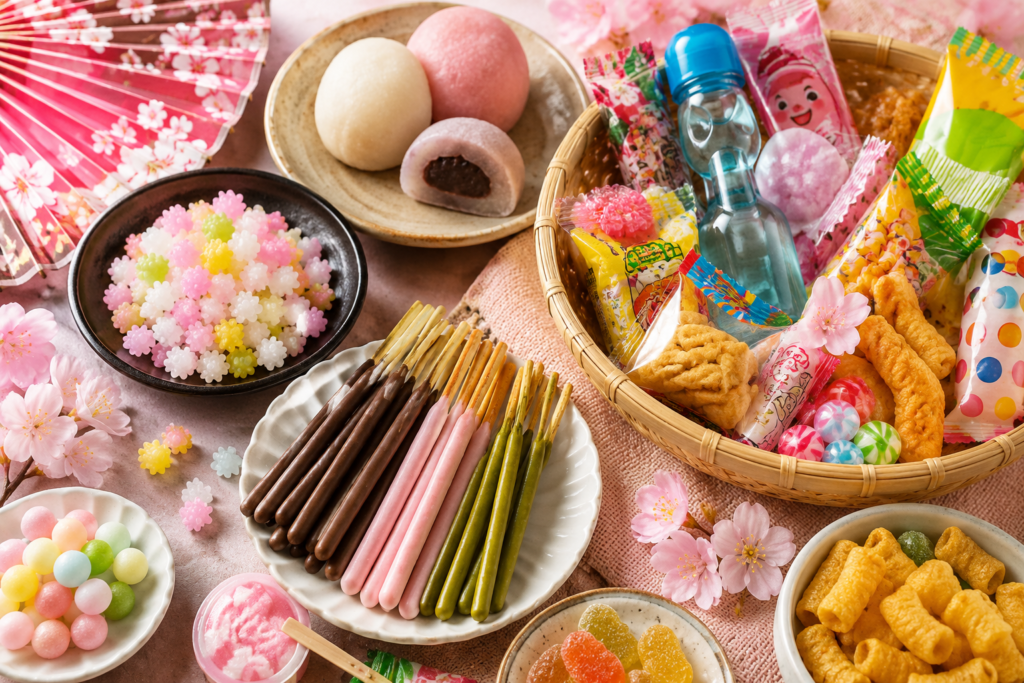
- Dagashi (駄菓子) — “Penny candy” with roots in Japan’s Edo period. These are simple, affordable, fun snacks originally made for children. Think corn sticks, ramune soda candy, and noodle-shaped crisps. Dagashi boxes are fantastic for snack exploration.
- Mochi — A confection made from glutinous rice with a soft, chewy, stretchy texture unlike anything in the American candy aisle. Mochi candies are a great entry point.
- Konpeito — Star-shaped sugar candies with a 400-year history in Japan, originally introduced by Portuguese traders. Their beautiful pastel colors make them one of the most visually striking Japanese treats.
- Pocky — The global icon. Thin biscuit sticks coated in chocolate or flavored cream. November 11 (11/11) is officially Pocky Day in Japan, designated by Glico in 1999.
🛒 What to Look for When Buying Japanese Snacks on Amazon
Not all Japanese snack listings are created equal. Here’s what to keep in mind before you buy:
- Single-item classics vs. curated gift boxes — Singles (like Pocky multipacks) are ideal if you already know what you love. Gift boxes (like dagashi sets) are better for sampling or gifting.
- Price range — Single-flavor multipacks run $5–$25; curated gift boxes range from $25–$60.
- Authenticity — Buy from official brand stores or established specialty sellers. Check seller ratings carefully.
- Allergen awareness — Most Japanese snacks contain wheat, soy, and/or milk. Product labels are often in Japanese, so always check the English allergen information on the Amazon product page before purchasing, especially if you have dietary restrictions.
- Best-by dates — Import snacks can arrive close to their expiration date. Choose high-turnover sellers and check product reviews for freshness feedback.
💡 Good to know
Imported snacks travel a long way, so check the listing’s recent reviews for comments on freshness and arrival condition. Once your snacks arrive, store opened bags in an airtight container away from heat to keep biscuit sticks crisp and chewy candies soft.
🏆 Best Japanese Snacks on Amazon — Our Top Picks
| Product | Price | Best For | |
|---|---|---|---|
| 🏆 | Japan2oz Sakura Box — 30-Piece Dagashi Set | ~$26 | Best all-around gift box |
| 🍬 | MARUTA Konpeito Hanatsume | ~$13 | Most iconic traditional candy |
| 🍫 | Pocky Chocolate Biscuit Sticks (10-pack) | ~$20 | Classic crowd-pleaser |
| 🍓 | Pocky Strawberry Biscuit Sticks (10-pack) | ~$18 | Best fruity flavor fan |
| 🌸 | YAMASAN Sakura Mochi Candies | ~$20 | Artisan traditional mochi treat |
| 😺 | Sanrio Hello Kitty Snack Box | ~$43 | Best kawaii gift for kids & collectors |
| 💰 | Puchao Chewy Candy 4-Flavor Variety Pack | ~$5 | Best budget entry point |
Japan2oz Sakura Box — 30-Piece Dagashi Gift Set
The best all-around pick if you want to explore Japanese snack culture or give a thoughtful, ready-to-gift present.
- 30 assorted pieces of traditional Japanese dagashi snacks
- Beautifully presented in a sakura-themed gift box — no extra wrapping needed
- Contents rotate seasonally, so each order is a new experience
- Great for office sharing, party favors, or sending to out-of-state friends
- Allergen note: Mixed contents — check the Amazon listing for current allergen information before purchasing
This is the snack box for someone who wants variety. You get a real cross-section of Japanese candy culture — from gummy chews and rice crackers to chocolate-coated biscuits and hard candy — all wrapped up in a presentable box that requires zero additional effort on gift day.
Price: $25.97 on Amazon (at time of writing)
MARUTA Candy Konpeito Hanatsume — 50 Mini Pouches
The most visually iconic Japanese candy available on Amazon, perfect for gifting, party favors, or impressing guests.
- Star-shaped sugar candy (konpeito) with a 400-year history in Japan
- Assorted pastel colors — instantly recognizable and visually stunning
- 50 individually wrapped mini-pouches in one package
- Allergen-friendly: Pure sugar — no wheat, milk, or soy
- 4,575 reviews with a ★4.7 rating — one of the highest-rated Japanese candies on Amazon
Konpeito is one of those rare candies that’s both delicious and genuinely beautiful. The pastel star shapes make an impression on anyone who hasn’t encountered them before. With 50 individual pouches, this is a natural choice for wedding favors, baby showers, or any event where you want a unique international touch. And because it’s allergen-free, it works for nearly any crowd.
Price: $12.80 on Amazon (at time of writing)
Pocky Chocolate Biscuit Sticks — Pack of 10 (Glico)
The original Japanese snack icon — a crowd-pleaser for every age, occasion, and snack drawer.
- Thin biscuit sticks dipped in smooth milk chocolate
- 10 boxes (2 bags per box) — great value for stocking up or sharing
- Made by Ezaki Glico, founded in 1922 — Japan’s most recognized snack brand
- November 11 is officially Pocky Day in Japan — a fun conversation starter
- Allergen note: Contains wheat, milk, and soy
Pocky is the gateway snack for most American fans of Japanese food — and for good reason. The chocolate-to-biscuit ratio is perfectly balanced, and the format (handheld stick, no mess) works brilliantly for movie nights, office snack bowls, or kids’ lunchboxes. If you’ve never tried Japanese snacks before, this is your starting point.
Price: $19.50 on Amazon (at time of writing)
Pocky Strawberry Biscuit Sticks — Pack of 10 (Glico)
The fruitier, sweeter cousin of classic Pocky — a fan favorite that rivals the original in popularity.
- Thin biscuit sticks coated in sweet strawberry cream
- 10 boxes per order — ideal for sharing or stashing
- Bright pink coating makes these visually fun and great for themed parties
- Allergen note: Contains wheat, milk, and soy
If you’re buying for kids or anyone who gravitates toward fruit flavors, strawberry Pocky often edges out the chocolate version as a preference. The pink packaging also makes it a natural pick for Valentine’s Day, birthday parties, or any occasion that calls for a little color. Pick up both flavors for a crowd and let people choose their side.
Price: $17.50 on Amazon (at time of writing)
YAMASAN KYOTO UJI Japanese Sakura Mochi Candies
An artisan-quality treat for anyone who wants to experience authentic Japanese confectionery beyond the mainstream.
- Soft, chewy mochi-style candy flavored with cherry blossom (sakura)
- 300g / 10.58oz of individually wrapped pieces — generous portion
- Vegan-friendly — no dairy or animal products
- Striking pink color — beautiful for gifts and tea time presentation
- Pairs especially well with green tea or hojicha
Mochi candy has a texture that genuinely surprises first-timers — soft, slightly sticky, and pleasantly chewy in a way that feels nothing like American gummies. The sakura flavor is delicate and floral, not overpowering. If you’re hosting a Japanese-themed dinner party or want to put something on the tea tray that guests will ask about, these are the ones.
Price: $20.38 on Amazon (at time of writing)
Sanrio Hello Kitty Japanese Snack Box
The ultimate kawaii gift for Hello Kitty fans, kids, or anyone who appreciates Japan’s pop-culture charm alongside their snacks.
- Officially licensed Hello Kitty branded collectible box
- Filled with assorted Japanese candy and snacks
- The box itself is a keepsake — many buyers reuse it for storage
- Over 3,000 reviews with a ★4.3 rating
- Allergen note: Mixed contents — check the Amazon listing for full allergen details
This one is less about any single snack and more about the complete experience. The Hello Kitty branding gives it instant appeal for kids and fans of Japanese character culture (known as kawaii). It works beautifully as a birthday gift or holiday present, especially for tweens or teens who are into anime and Japanese pop culture. Expect genuine excitement when this one gets unwrapped.
Price: $42.87 on Amazon (at time of writing)
Puchao Chewy Candy — 4-Flavor Variety Pack (UHA Mikakuto)
The most affordable way to get a taste of Japanese candy — perfect for curious first-timers or stocking stuffers on a budget.
- 4 rolls across Apple, Watermelon, Grape, and Orange flavors
- Unique dual-texture: chewy outer candy with a fizzy gummy center
- Made by UHA Mikakuto, a well-regarded Japanese candy brand
- Under $5 — the lowest price point among Japanese snacks on Amazon
Puchao is a great introduction because the flavors are familiar (fruit) while the texture is entirely Japanese — that chewy-then-fizzy combination catches people off guard in the best possible way. At $4.99, it’s also a near-zero-risk purchase. Buy a pack alongside a Pocky multipack and you’ve got a solid starter Japanese snack haul for under $25.
Price: $4.99 on Amazon (at time of writing)
✅ Final Thoughts
Japanese snacks offer something genuinely different from anything you’ll find in an American grocery store — in terms of flavor, texture, and presentation. The good news is that Amazon makes it easier than ever to access authentic Japanese treats without a trip to an import specialty store.
If you’re buying for yourself, start with Pocky or Puchao and work your way up to the artisan options like YAMASAN Sakura Mochi Candies. If you’re buying as a gift, the Japan2oz Sakura Box or the Hello Kitty Snack Box will land well for almost anyone.
One final reminder: always check the allergen information on each Amazon product page before purchasing, especially for gift boxes with rotating contents. Most Japanese snacks contain wheat, soy, or milk — and labeling is often in Japanese, so the English Amazon listing is your best resource.
Happy snacking — and welcome to one of the most fun corners of Japanese food culture.